
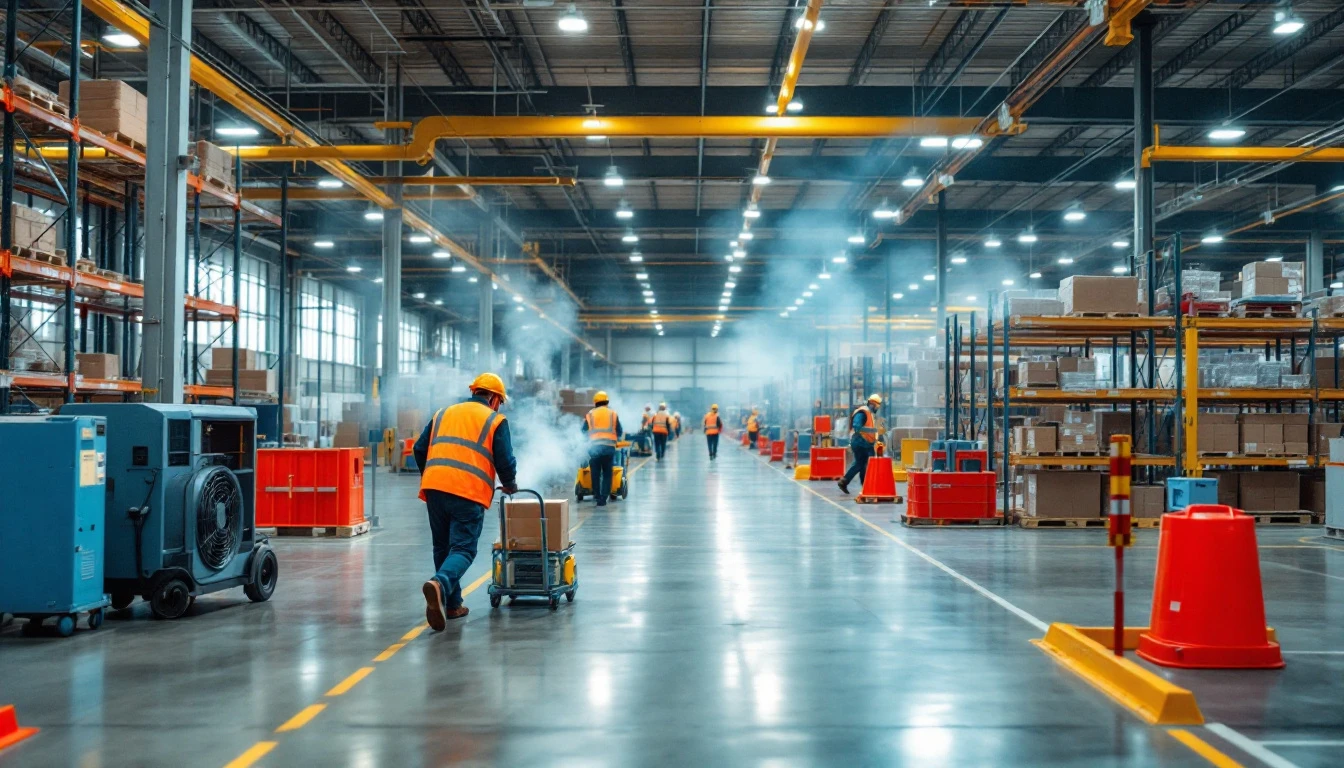
OSHA Heat Standards & Retail Impact
Heat-driven staffing decisions expose a familiar scheduling conflict: concentrate people in cooler morning and evening windows and you abandon peak midday traffic; keep full coverage all day and your four-wall P&L bleeds from paying staff to stand in 95-degree stockrooms while no customers arrive. Compliance with OSHA's new heat standards (enforceable July 2026) forces operators to solve this tension—and the operators who win treat it as a forecasting problem tied to demand, not a cost-cutting exercise. Your facility checklist is simple: document which zones exceed OSHA thresholds, assess when those zones align with peak-traffic demand, and build your schedule around protecting both coverage and staff safety.
From a four-wall perspective, heat management is a scheduling optimization problem. Unmanaged heat costs money three ways: OSHA violations ($15,000+ per incident), heat-related turnover (replacement hiring costs can reach $3,000–$5,000 per associate), and productivity losses when backroom and loading-dock staff work in unsafe conditions. The operators who get ahead of this link their heat-risk assessment directly to their demand forecast and labor plan—turning a compliance requirement into a margin-protection lever. A single heat-related injury can trigger multiple expense categories—medical claims, replacement hiring, training costs, and the productivity loss from understaffing during peak traffic.
Proactive compliance protects the four-wall P&L and keeps the workforce stable. The operators moving fastest are those who link their facility risk assessment to their demand forecast—so they can see exactly which dayparts and locations need staffing adjustments, and model the P&L impact before peak heat arrives. See how PlannerPuffin connects your heat-risk zones to your labor plan.
Three-Step Facility Risk Assessment
Before you invest in cooling infrastructure or rewrite shift patterns, anchor your decisions in two numbers: your demand forecast and your current SPLH by zone. Heat exposure + high-traffic dayparts = the pressure points where understaffing hits margin hardest. Your facility audit should map those intersections so you can choose whether to cool, adjust staffing, or do both—with the P&L impact of each option in front of you. Complete this assessment by mid-July so you control your response instead of reacting in August. Operators who finish early can model two to three staffing scenarios against their demand forecast and see which combination of schedule adjustments and cooling investments protects both coverage and four-wall margin.
- Step 1: Evaluate store layout and high-risk zones. Walk your stockroom, receiving area, and outdoor zones—the places where customer-facing coverage gets built. Map temperature during your peak traffic windows (usually mid-afternoon and weekend rushes—the same dayparts where your demand forecast drives highest labor hours). Zones that exceed OSHA thresholds during peak demand are where your scheduling conflict bites hardest: you can't reduce coverage without losing sales, but full coverage in heat costs money and burns out staff. Document zones that consistently approach or exceed OSHA thresholds (80°F heat index for initial awareness, higher for mandated controls).
- Step 2: Identify staffing roles and shifts most exposed. Which positions spend the most time in high-risk zones? Receiving teams, stock replenishment, custodial staff, and outdoor cart attendants often face the greatest exposure. Cross-reference this with your demand forecast to pinpoint when heat stress and peak labor hours converge. That intersection is where SPLH targets become hardest to hit and where staffing decisions hit your four-wall margin. Stagger shifts away from peak heat during low-traffic windows and you improve both coverage efficiency and worker safety.
- Step 3: Assess HVAC capacity and ventilation adequacy. Confirm whether your system can maintain safe conditions during peak occupancy and heat, or if you need emergency repairs in August. Identifying gaps now avoids schedule disruptions and the four-wall margin hit that comes with unplanned downtime. Link your findings to PlannerPuffin so you can model schedule changes and cooling investments against the same demand forecast that drives your SPLH targets. See exactly what a shift-stagger costs in coverage hours and what a portable AC unit costs in infrastructure spend—then pick the P&L combination that works for your stores.

Cooling Infrastructure & Investment ROI
Quick-deploy solutions offer the fastest path to compliance and workforce protection. Portable air conditioning units install in days and immediately protect high-exposure zones. From a scheduling perspective, they buy you flexibility: a cooler loading dock means you can keep more staff there during peak traffic without burnout. Ceiling fans improve air circulation without major HVAC overhauls and provide cost-effective supplementation to existing systems. Misting systems for loading docks and outdoor retail zones offer entry-level options for high-exposure areas. These solutions fit compressed July-to-August timelines and begin reducing heat stress before peak demand arrives.
Full HVAC upgrades carry higher upfront costs—often $5,000 to $25,000 depending on store size—but reduce energy bills year-round and extend equipment life. The payback calculation is simple: a two-person backroom turnover costs $..."6,000–$10,000 in hiring and training. One prevented heat-related departure pays for portable cooling in a single season. Add OSHA fines (starting at $15,000 per violation) and the decision becomes obvious—but run the numbers yourself. A $4,000 portable AC unit vs. $8,000 in turnover replacement costs tells you which stores need cooling first. A store losing two backroom associates to heat-related turnover costs faces replacement costs that can eclipse a portable cooling investment within a single season, making quick-deploy infrastructure both a compliance tool and a four-wall profitability decision.

Staffing Protocols & Schedule Optimization
Heat protection doesn't require hiring extra bodies—it requires scheduling the right coverage at the right time. Your demand forecast already tells you when traffic peaks; your heat risk assessment tells you which zones employees can't work safely. Stagger shifts to move staff out of the hottest dayparts and into cooler windows where traffic is climbing. This is demand-driven scheduling, not staffing cuts—you're protecting SPLH by matching people to traffic, not reducing coverage. PlannerPuffin's platform integrates demand forecasting directly into schedule-building. Schedule fewer people during low-traffic midday heat, then ramp up as temperatures drop and foot traffic climbs. The result: better SPLH targets because you're matching labor hours to traffic, and safer working conditions because you're moving staff out of heat during downtime.
Build mandatory break schedules into daily operations—hydration checkpoints every two hours, rest periods in climate-controlled stockrooms or break areas, and temperature monitoring at the start of each shift. Adjust dress codes to permit lightweight, breathable fabrics that don't compromise brand standards but reduce heat stress on the floor.
Train floor supervisors to spot early signs of heat illness. Excessive sweating followed by confusion, nausea, dizziness, or cessation of sweating. Train floor supervisors to recognize heat illness early (excessive sweating followed by confusion, nausea, or dizziness are critical signals) and know when to move an employee to a cool area vs. calling for help. Good documentation protects you from OSHA disputes and helps your team predict which shifts and zones consistently generate incidents—data you feed back into your demand forecast and scheduling logic.
Implementation Timeline: July to August
Your window to act is mid-July. Operators who finish their risk assessment by then control the response: they can model staffing and cooling scenarios, place equipment orders before supply chains tighten, and train supervisors before peak heat hits. Waiting until August forces reactive decisions and creates operational chaos. Assign the first two weeks of July to walking every location, documenting heat exposure zones, and cataloging HVAC capacity against your store footprints. This baseline determines which sites need cooling upgrades, where shift staggering is mandatory, and how your labor budget needs to flex before the peak August heat window opens.
By the end of week three, finalize your infrastructure decisions. If portable AC units or ceiling fans are part of your cooling plan, place orders immediately—supply chains tighten as summer demand spikes. Week four is your buffer for vendor confirmations and delivery scheduling, so equipment arrives before temperatures climb.
August shifts from planning to execution. Roll out staffing protocols, train supervisors on heat illness recognition, and validate that break schedules and hydration stations are embedded in your daily operations. Managers who complete the July sequence gain a compliance buffer before OSHA enforcement activity and heat-related incidents peak. Delaying any step into August creates operational chaos when you need stable routines most.
Compliance Monitoring & Enforcement Readiness
Documentation builds two things: a clear audit trail of your compliance effort, and proof to your team that you prioritize their safety. When staff see temperature logs, incident reports, and immediate corrective action, they trust the operation—and that trust reduces turnover during tight labor markets. Build a structured audit trail that captures every step of your compliance effort: assessment findings, cooling upgrades, protocol changes, staff training records. And incident reports. This paper trail demonstrates good-faith effort when OSHA walks through the door.
Conduct monthly temperature and humidity checks in high-risk zones and cross-reference them against your actual demand and staffing for those dayparts. You'll spot patterns: maybe your loading dock hits dangerous heat only during peak traffic Thursdays, or your stockroom climbs into unsafe range on quiet Tuesday mornings. That data lets you adjust staffing proactively instead of reactively. A simple log template should capture date, time, zone, wet-bulb globe temperature or heat index, and any corrective actions taken. Add columns for break-time verification and employee-reported concerns to close the feedback loop.
Train every shift lead to recognize and report unsafe heat conditions, and establish a protocol for escalating concerns immediately. When staff see their reports trigger action—fan placement, schedule adjustments, hydration station restocks—they trust that safety is a priority, not a checkbox. That trust reduces turnover in tight labor markets. PlannerPuffin's platform tracks scheduling data, break compliance, and temperature conditions in one place—so you can see exactly how heat management affects your SPLH targets, labor cost %, and four-wall margin. Learn how PlannerPuffin connects heat compliance to labor planning and protect your margin through peak heat season.